.avif)
.avif)
.avif)
.avif)

.avif)
.avif)
.avif)
.avif)


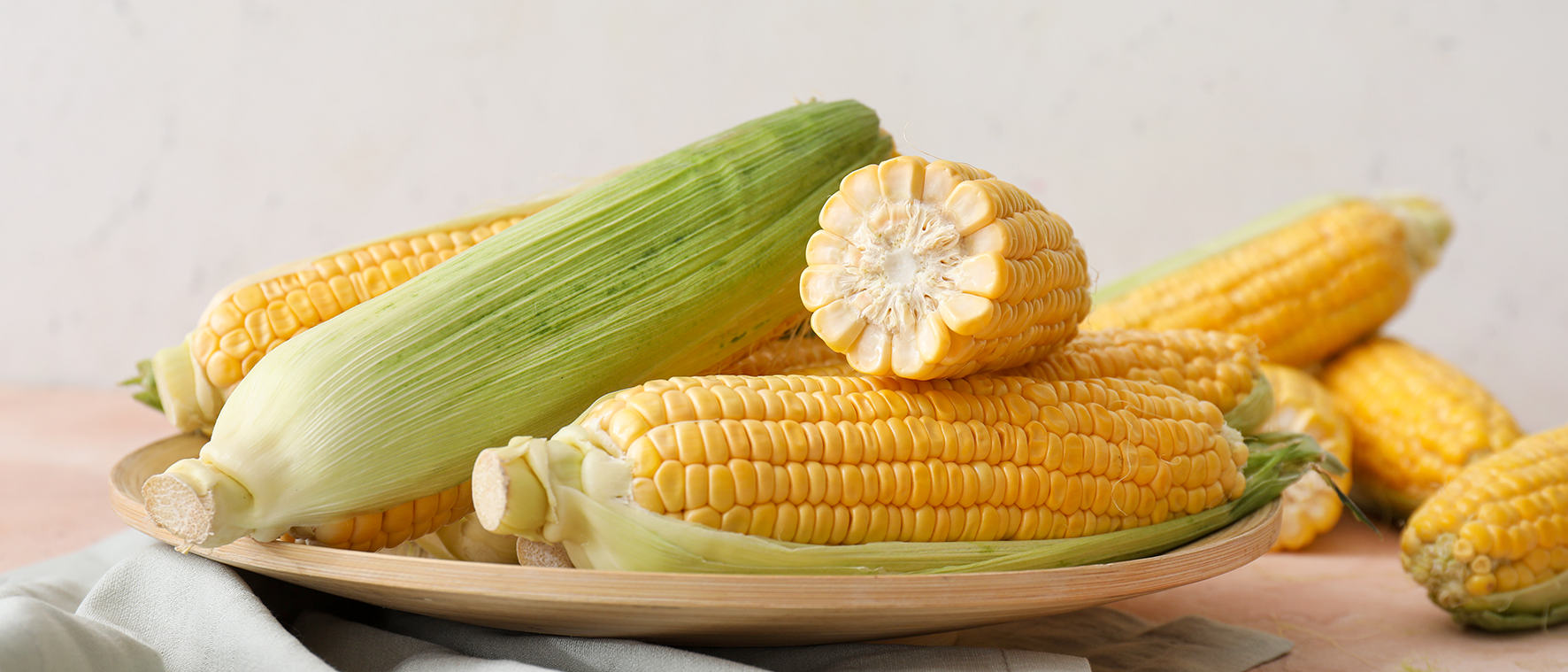
Sweet corn is also known as ‘corn on the cob’, this nutritious staple is botanically a grass, but treated as both a vegetable and a grain. The entire ear is harvested with the husk intact to preserve its characteristic sweetness, a stark contrast to mechanically shelled field corn.
Interesting Sweet Corn Facts
· The Iroquois gave the first recorded sweet corn(called ‘Papoon’) to European settlers in 1779 (Farmers Market Produce, 2026).
· Native Americans used the leaves of the sweetcorn plant as a type of chewing gum.
· Fresh sweet corn must be eaten soon after picking, as the sugars rapidly convert to starch.
· Most common color is yellow, but varieties also come in white, blue, red, purple and black.
· Each ear of corn always has an even number of rows (usually 16), and averages 800 kernels. Each kernel has its own strand of silk.
Growing Sweet Corn
Sweet corn requires fertile, well-drained soil, full sun, and consistent moisture. The crop requires 18 to 28 inches of water per acre, depending on weather conditions throughout the growing season. Water needs are especially critical during tassel, silk, and ear formation. Drought stress during ear development will decrease yield, lower kernel quality, and negatively affect flavor (Utah State University, nd).
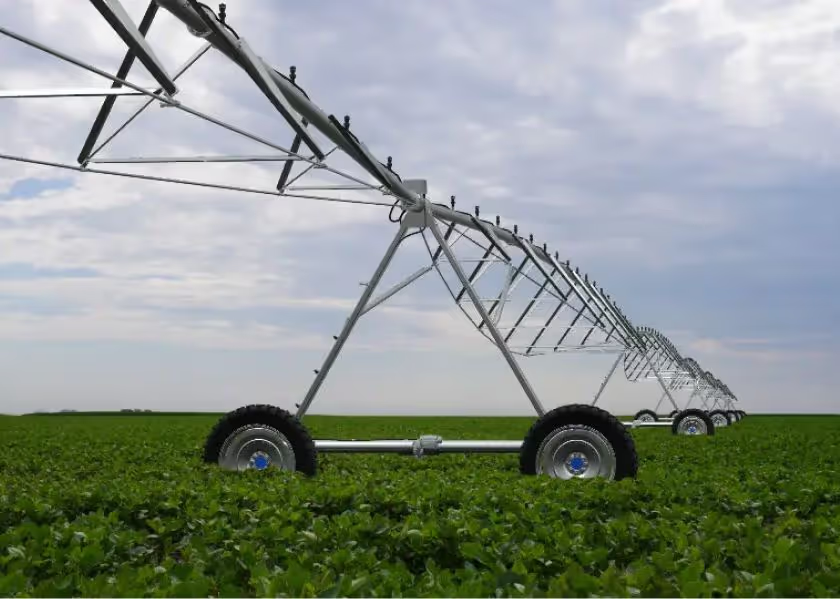
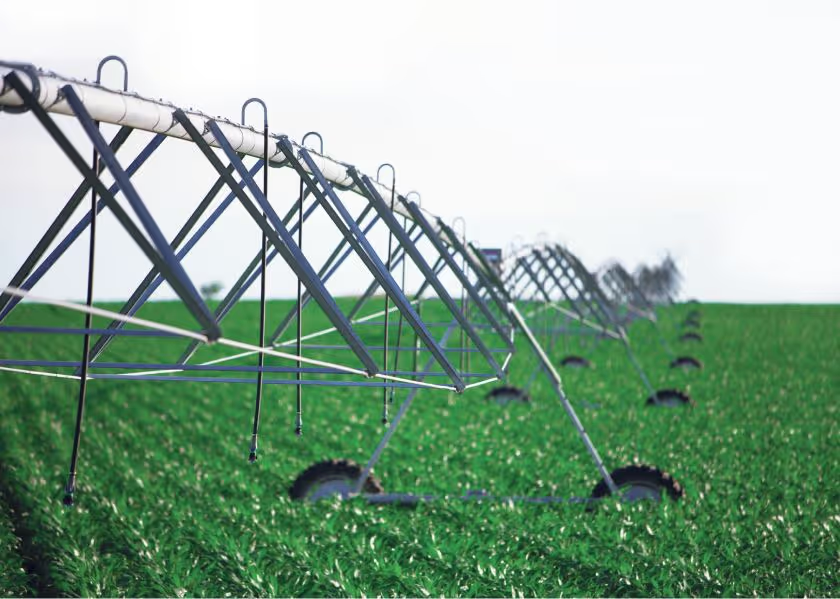
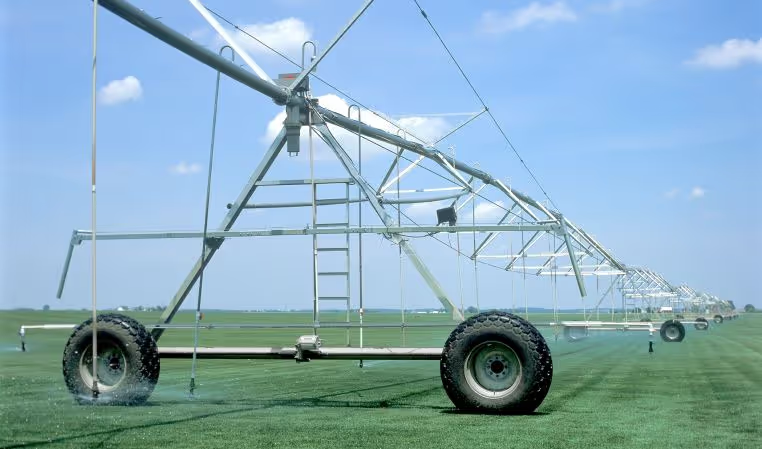
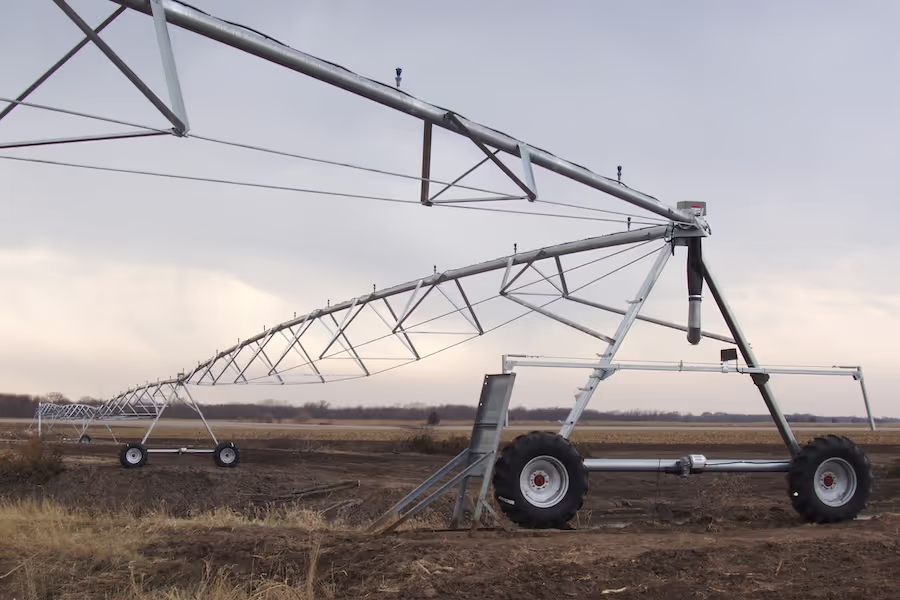
Center pivot irrigation systems provide uniform and efficient water distribution, which is critical for this crop. Sweet corn has as hallow rooting system compared to field corn, making it sensitive to waters tress. Center pivots deliver steady water application, effectively preventing plant stress during critical growth stages.
Sweet corn needs a continuous supply of moisture to ensure pollination and growth of kernels in the ear. After the tassels are produced, sweet corn requires 1 to 1.5 inches of water each week. Overhead irrigation is the most common method (NC State Extension, 2024).
An additional advantage is the ability to apply fertilizers and pesticides directly through the irrigation system (fertigation and chemigation). This ensures even distribution across the field while reducing application labor and improving timing.
Moisture is needed for effective herbicide activation and during the early stages of germination and plant emergence. Soil moisture is also critical during silking and ear development (Oklahoma State University Extension, 2017).
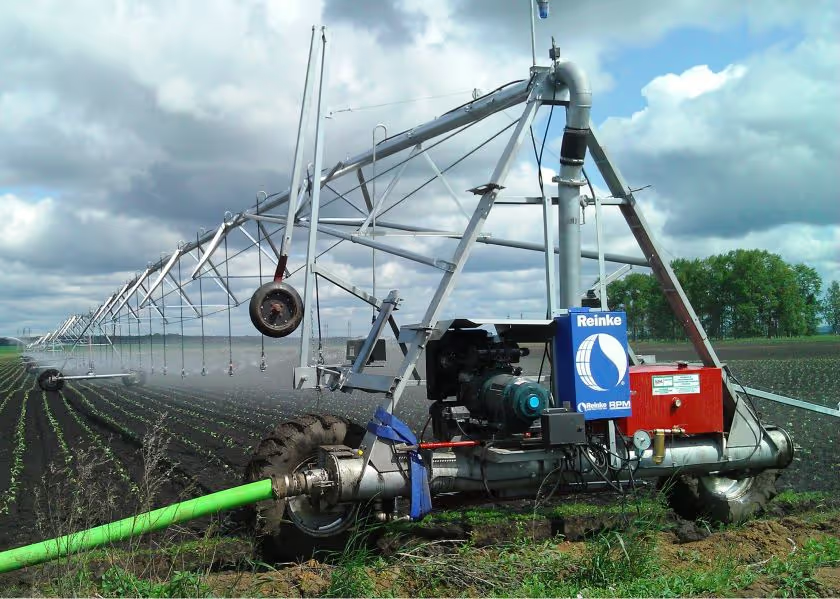
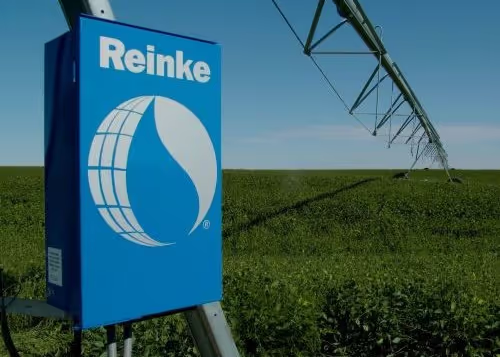
Every Reinke center pivot system is custom-designed to meet the specific needs of the grower, offering unmatched flexibility and precision for sweet corn production.
Precise Irrigation Management
Precise irrigation management is crucial for high-quality sweet corn production throughout the growing season. Pairing a Reinke center pivot system with smart irrigation technology allows the grower to optimize water efficiency at every stage of the crop cycle. Precision agriculture can be implemented through a suite of technologies that can be used in isolation or in conjunction with other technologies (U.S. Government Accountability Office,2024).
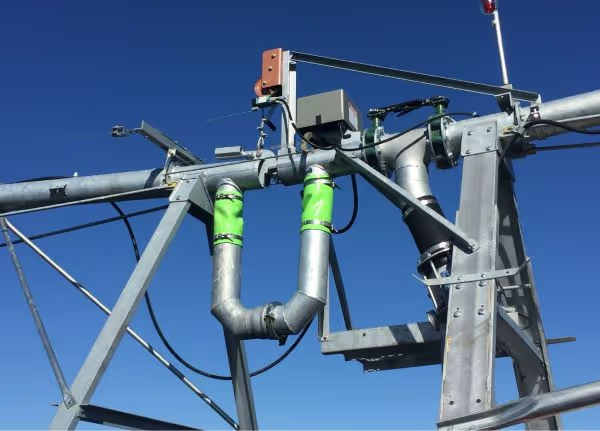
By integrating agricultural data with irrigation controls, growers can quickly adapt to changing conditions and make real-time adjustments from any smart device, anywhere. This precision enables them to fine-tune irrigation strategies based on actual crop needs and field conditions.
Precision irrigation delivers significant advantages: minimizing water runoff, reducing operation expenses linked to water and energy consumption, and enhancing crop yields.
Center pivot irrigation has significantly increased irrigation water use efficiency while reducing labor costs, allowing farmers to manage their operations more effectively (Stone, 2024).
Partner with Reinke
Reach out to a Reinke dealer to discover how the right irrigation system can enhance sweet corn quality and marketability. By pairing smart irrigation technology with Reinke center pivot systems, growers gain the tools needed to fine-tune water distribution for optimal crop performance.
Reinke dealers have the expertise to recommend customized irrigation systems and technology setups that match each grower’s unique field conditions and production goals. Engineered for durability and performance, Reinke center pivot irrigation systems provide the precision and reliability that sweet corn growers depend on season after season.
References
Stone, G. (2024, July 25). Center pivots: Innovation that grew crops and acres in Nebraska. Crop Watch, University of Nebraska-Lincoln Extension. https://cropwatch.unl.edu/2024/center-pivots-innovation-grew-crops-and-acres-nebraska/
Oklahoma State University Extension. (2017). Sweet corn production (Fact Sheet HLA6038). https://extension.okstate.edu/fact-sheets/sweet-corn-production.html
U.S. Government Accountability Office. (2024, January 31). Precision agriculture: Benefits and challenges for technology adoption and use (GAO-24-105962). https://www.gao.gov/products/gao-24-105962
Farmers Market Produce (2026). Sweet Corn. https://www.burlcoagcenter.com/farm-market-products/sweetcorn/ Burlington County Agricultural Center
Utah State University, Utah Vegetable Production Guide, Extension. (nd). Irrigation. https://extension.usu.edu/vegetableguide/sweet-corn/irrigation#:~:text=Sweet%20corn%20requires%2018%20to,be%20allowed%20to%20dry%20out
NC State Extension. (2024). Organic Sweet Corn Production/Irrigation and Suckering. https://content.ces.ncsu.edu/organic-sweet-corn-production