.avif)
.avif)
.avif)
.avif)


.avif)
.avif)

.avif)
.avif)


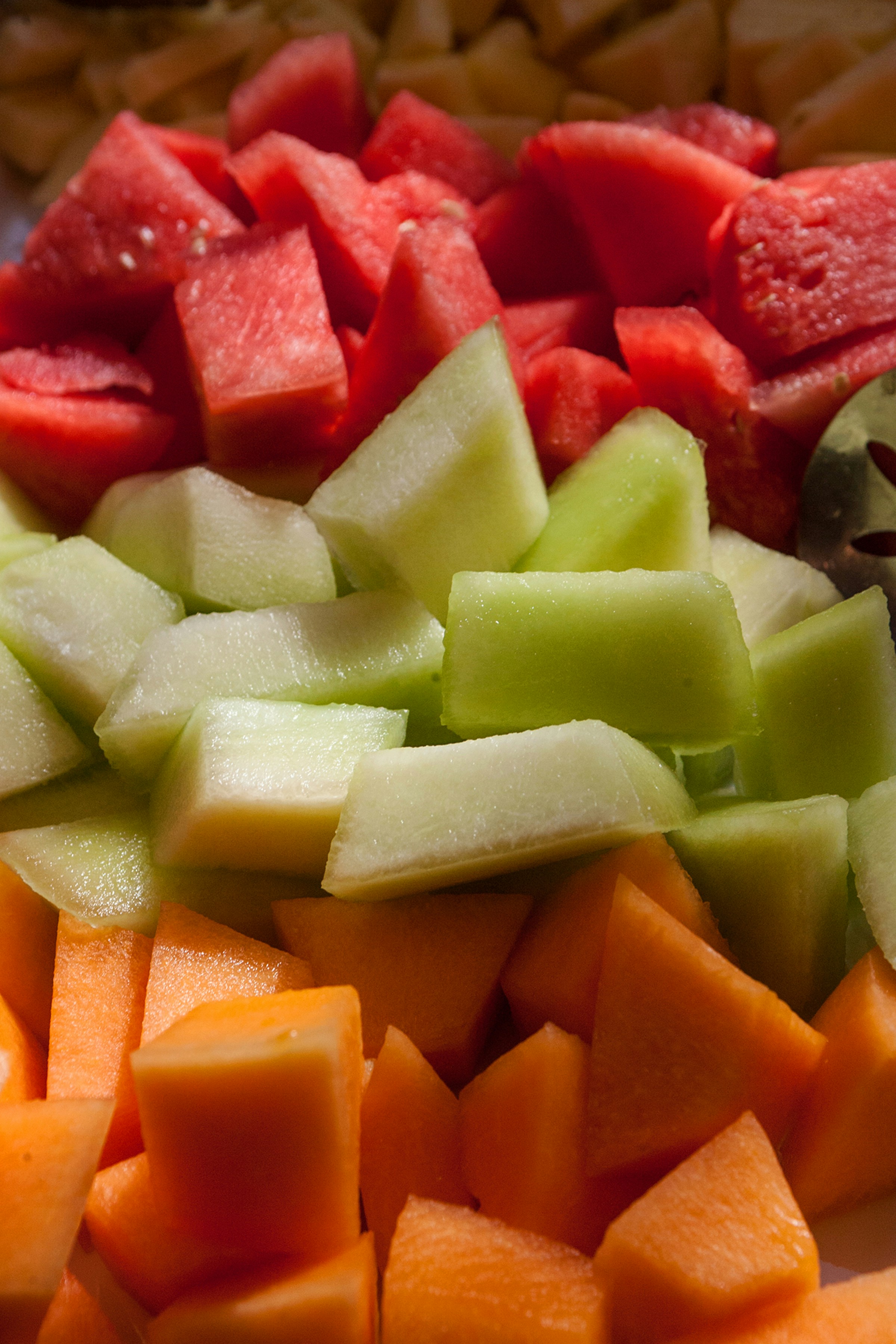
Melons come in a variety of flavors and colors, with more than 1,200 varieties available. Each is nutrient-dense, low-calorie, and offers significant hydration.
Melons are characterized by their thick rind, fragrant pulp, and high water content.
They are generally split into two main categories: muskmelons and watermelons. Even though they are divided into two groups, they both belong to the same family, Cucurbitaceae or in layman’s terms, the gourd family.
Key Types of Melons
Muskmelons have different types of flesh and rinds.
· Cantaloupe: sweet, orange-fleshed melon with an etted rind.
· Honeydew: sweet, pale to bright lime-green flesh with smooth, pale green to yellow rind.
· Crenshaw: very sweet, orange-flesh and yellow-green, thick rind.
· Casaba: sweet, mild flavor, white or pale yellow flesh and a coarse, ribbed rind.
When selecting a ripe muskmelon, it should feel heavy for its size, have a sweet, fragrant aroma at the stem end, and possess a thick, cream-or-beige colored netting with little to no green showing underneath.
For melons without the netted rind, such as the honeydew: look for a creamy yellow, matte-colored rind rather than green, ensure it feels slightly waxy or sticky, with a pleasant, sweet aroma at the stem end.
Watermelons are known for thick green rinds and crisp flesh.
· Crimson Sweet: very sweet, bright red flesh with dark green stripes on the rind.
· Black Diamond: exceptionally sweet, red flesh and very dark, thick rind.
· Sugar Baby: very sweet red flesh, dark green rind and small in size (a popular ‘icebox’ melon).
· Charleston Gray: exceptionally sweet, red flesh with light-green rind.
· Moon and Stars: floral sweet flesh, unique dark purple and black skin with yellow spots.
A high-quality, ripe watermelon should feel heavy for its size, have a dull rind (rather than shiny), and produce a hollow, drum-like sound when tapped.
Picking a ripe melon is very difficult and is not an exact science. Melons ripen on the vine and do not get any sweeter once picked, although texture and flavor can improve (Earl’s Organic Produce, 2022).
Irrigating Melons
Melon plants require deep, consistent watering, aiming for soil moisture that is damp, but not water logged. Deep watering is an essential technique for growing strong, healthy melon plants. This method encourages roots to grow deeper into the soil, making the plant more resilient to drought and fluctuations in surface moisture (Grow Organic, 2025).
Adequate moisture is needed during periods of growth, flowering, and fruit development. During hot, dry weather, watering is increased and then reduced as the fruit nears ripening. When melons are over watered, it can lead to shallow roots, root rot, or split fruits; too little water causes poor fruit development or blossom drop.
The goal of a well-managed irrigation program is to maintain soil moisture between field capacity and the point of allowable depletion, or in other words, to make sure that there is always readily available water and that plants do not experience water stress (Maughan, et al., 2015).
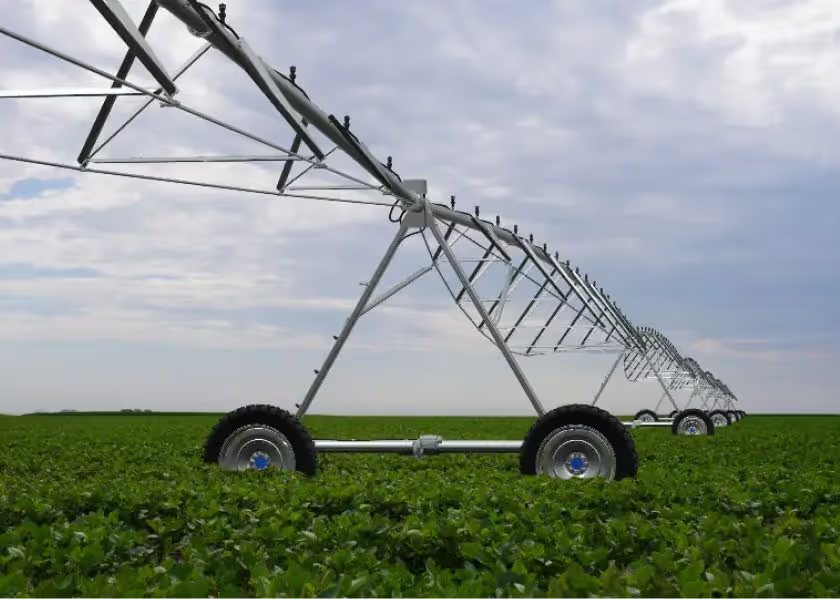
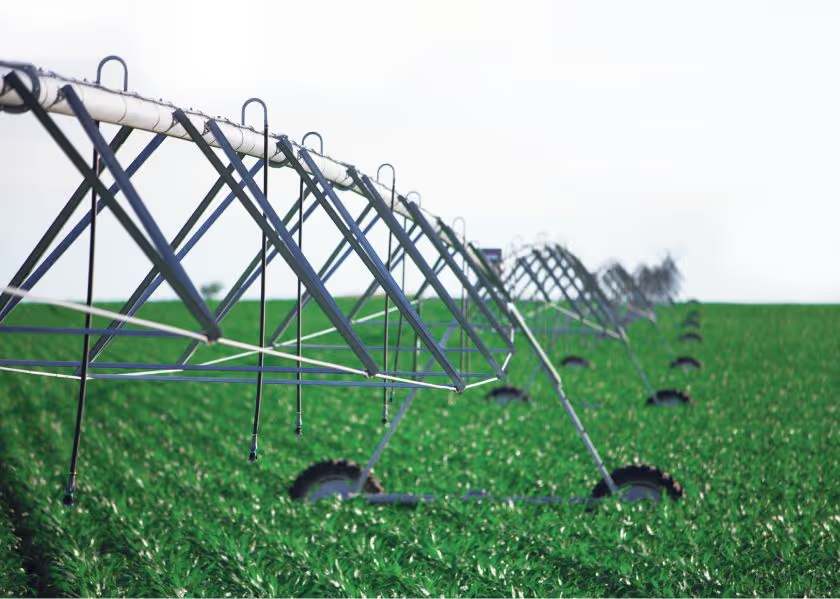
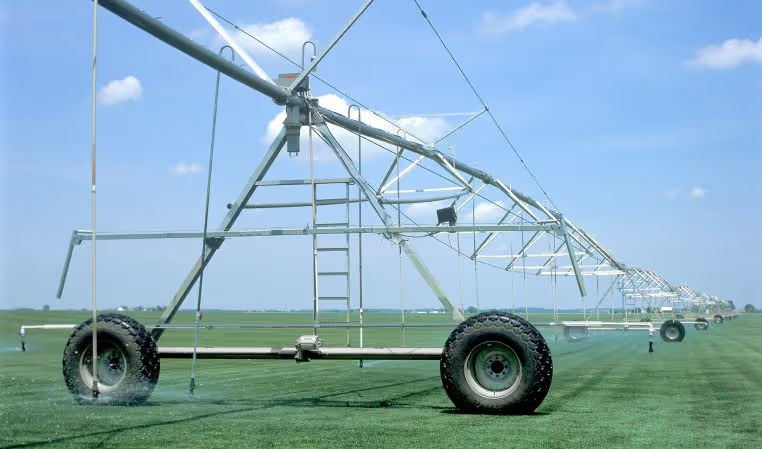
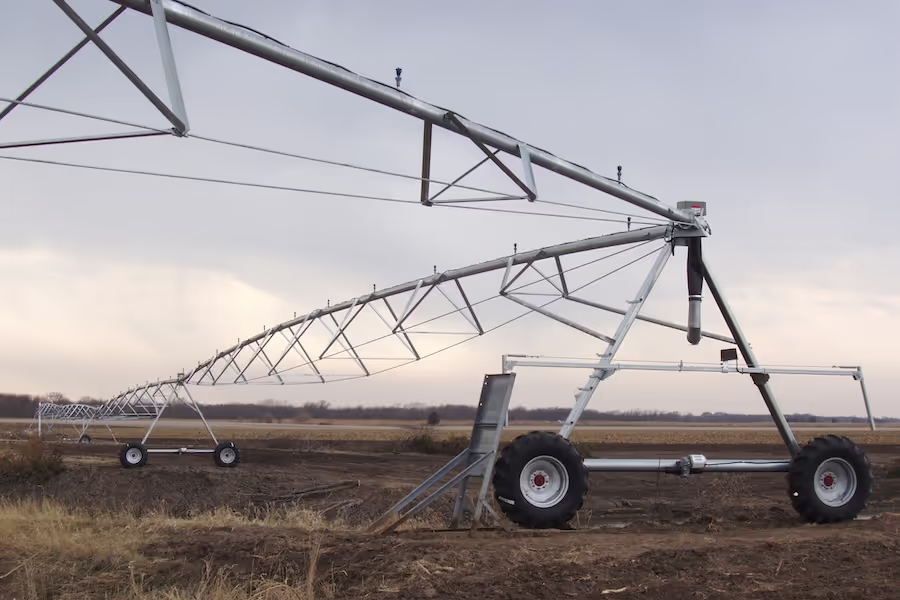
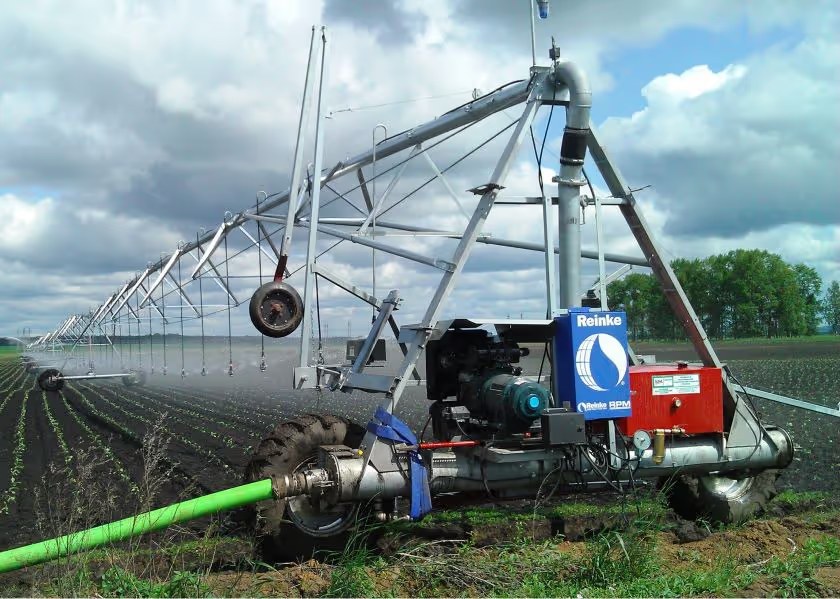
For consistent water application, center pivot irrigation is an excellent choice for melons. The irrigation system enables the grower to apply precise amounts of water tailored to the needs of the melon, rather than holding fast to rigid schedules.
The grower benefits from the unique flexibility offered by a Reinke center pivot system. Whether adjusting application rates during fruit development or scaling back as melons near harvest, Reinke's precision irrigation technology allows growers to respond to crop needs in real time, delivering the right amount of water at the right time, while reducing waste and labor demands.
Transforming Irrigation Management
Growers are transforming their approach to watering decisions by utilizing advanced irrigation management tools, and Reinke center pivot systems seamlessly integrate with them.
Center pivot irrigation has significantly increased irrigation water use efficiency while reducing labor costs, allowing farmers to manage their operations more effectively (Stone, 2024).
By integrating smart irrigation tools into their center pivot system, growers have the power to make informed decisions from any smart device, regardless of location. This technology empowers them to improve irrigation strategies with unparalleled accuracy.
Irrigation decision-making tools such as irrigation scheduling programs and soil moisture sensors are available to improve the irrigation water use efficiency. In addition, irrigation system design, maintenance, and operation can improve application efficiency (Dong et al., 2020).
Precision irrigation offers multiple advantages, such as boosting crop yields, reducing water run off, and lowering operational expenses linked to water and energy usage.
Achieve Superior Outcomes
Contact a Reinke dealer to learn how an effective irrigation system can elevate melon production. Reinke dealers are knowledgeable in recommending tailored irrigation systems and technology configurations to fit the specific field conditions and production objectives.
When smart irrigation technology is used in conjunction with Reinke center pivot systems, the grower will achieve superior crop quality and yield outcomes. Reinke center pivot irrigation systems are engineered for durability and performance, delivering the precision and reliability melon growers rely on year after year.
References
Stone, G. (2024, July 25). Center pivots: Innovation that grew crops and acres in Nebraska. Crop Watch, University of Nebraska-Lincoln Extension. https://cropwatch.unl.edu/2024/center-pivots-innovation-grew-crops-and-acres-nebraska/
Dong, Y., Kelley, L., Miller, S.A. (2020). Efficient Irrigation Management With Center Pivot Systems. https://www.canr.msu.edu/resources/efficient-irrigation-management-with-center-pivot-systems, Michigan State University, MSU Extension, Irrigation.
Grow Organic (2025). Watering Melons the Right Way: A Guide to Healthy, Flavorful Fruits. https://www.groworganic.com/blogs/articles/watering-melons-the-right-way-a-guide-to-healthy-flavorful-fruits-srsltid = AfmBOopf40artVfabxO7i9nxZYW8RubqbJKbFMIKNzFmJ9lvN50Hfb0v
Maughan, T., Drost, D., Allen, N., & Black, B. (2015,February). Vegetable Irrigation: Melon. https://digitalcommons.usu.edu/cgi/viewcontent.cgiarticle=1693&context=extension_curall, Utah State University Extension.
Earl’s Organic Produce (2022). Picking a Ripe Melon. https://www.earlsorganic.com/blog/how-to-tell-if-a-melon-is-ripe-c5dre